
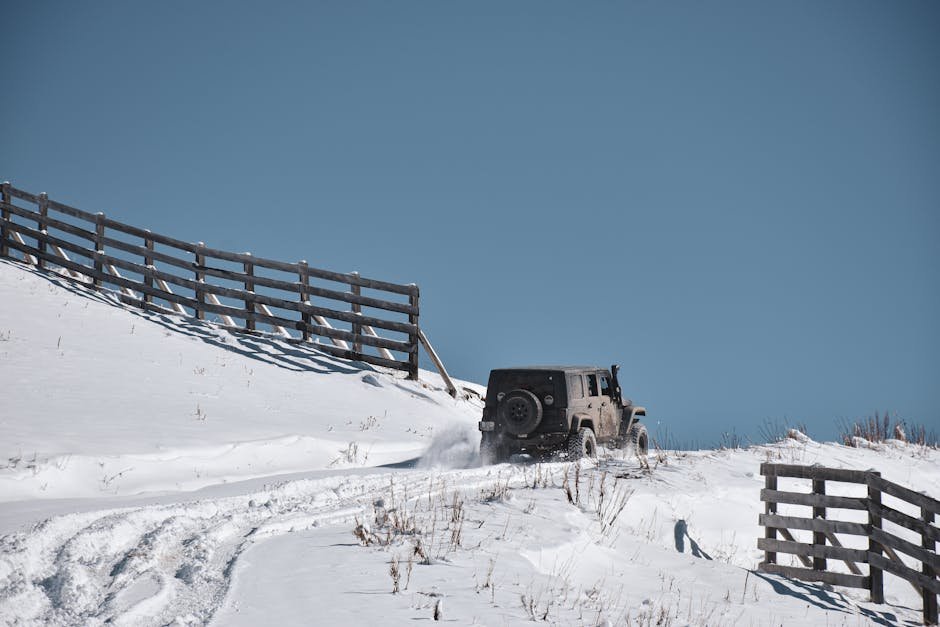

Winter Jeep Maintenance: Keeping Your Rig Trail-Ready in Cold Weather
I am going to be real with you: last winter I nearly stranded myself on a trail in the Colorado high country because I got lazy with my winter Jeep maintenance. The temperature had plummeted overnight, my battery barely had enough juice to crank the engine (see our trail GPS apps), and my windshield washer fluid had frozen solid in the reservoir. I sat there in the predawn cold, cursing myself, and made a promise that I would never let it happen again. That experience is the reason this article exists.
Winter changes the game for Jeep owners. The cold affects every fluid in your drivetrain, punishes your battery, accelerates rust, and makes trail conditions exponentially more demanding. If you are running a Jeep Wrangler year-round — especially if you are hitting trails in snow and ice — you need a dedicated cold weather prep routine. I have spent the years since that miserable morning dialing in my Jeep cold weather prep process, and I want to share everything I have learned so you can keep your rig reliable, safe, and trail-ready all winter long.
Let us get into it.
Fluid Checks: The Foundation of Winter Jeep Maintenance
If there is one section of this guide you absolutely cannot skip, it is this one. Cold temperatures change how every fluid in your Jeep behaves. Thicker fluids mean harder starts, slower shifting, increased wear, and reduced protection. Going through each one systematically before winter hits is the single most impactful thing you can do for your Jeep cold weather prep.
Engine Oil: Weight Matters More Than You Think
Most Jeep Wrangler owners run 5W-20 or 5W-30 year-round, and for the majority of climates, that is perfectly fine. The “5W” part of that rating tells you the oil’s viscosity at cold temperatures — the lower that number, the easier the oil flows when it is freezing outside. If you are regularly seeing temperatures below zero degrees Fahrenheit, you might consider switching to a full synthetic 0W-20 for the winter months. Full synthetic oils flow better at extreme cold and provide faster protection on startup, which is when the most engine wear occurs.
Here is what I do: I run Mobil 1 0W-20 full synthetic from November through March, then switch back to 5W-30 for the warmer months when I am pushing the engine harder on summer trails. Is it absolutely necessary? Probably not for most people. But oil is cheap, and engines are not. If you live anywhere that regularly dips below 10 degrees Fahrenheit, a winter-weight oil swap is worth the peace of mind.
Coolant: Your Freeze Protection Lifeline
Coolant does two jobs: it prevents your engine from overheating in summer and prevents it from freezing in winter. That second job is the one that matters right now. Your coolant should be a 50/50 mix of antifreeze and distilled water, which provides freeze protection down to about minus 34 degrees Fahrenheit. If you live somewhere truly brutal — I am looking at you, Minnesota and Montana — you can run a 60/40 antifreeze-to-water ratio for protection down to roughly minus 62 degrees Fahrenheit. Do not go beyond 70/30 though, because too much antifreeze actually reduces the mixture’s ability to transfer heat.
Pick up a coolant hydrometer or a refractometer from any auto parts store. They cost a few bucks and will tell you exactly what your freeze point is. Test your coolant before winter arrives. If the protection level is not where it should be, drain and refill with the correct ratio. While you are in there, inspect your hoses for cracks, bulges, or soft spots. Cold temperatures make rubber brittle, and a failed heater hose on a January trail is about as fun as it sounds.
Brake Fluid: The One Everyone Forgets
Brake fluid is hygroscopic, meaning it absorbs moisture from the air over time. That moisture lowers the fluid’s boiling point (a problem in summer) but also introduces a risk of micro-crystallization and reduced performance in extreme cold. If you cannot remember the last time you flushed your brake fluid, do it now. Fresh DOT 4 fluid handles temperature extremes far better than fluid that has been sitting in your lines for three years absorbing humidity.
I flush my brake fluid every two years as a rule, and I always make sure it is fresh before winter trail season. It takes about 30 minutes with a helper and a bottle of DOT 4, and it is one of the cheapest insurance policies you can buy for winter trail driving safety.
Transfer Case and Differential Fluids
These are the fluids that everyone neglects until something expensive breaks. Your transfer case and differentials are full of gear oil that gets significantly thicker in cold weather. Thick gear oil means more resistance, harder shifting into four-wheel drive, and increased wear on your gears and bearings during winter off-road driving.
Check your owner’s manual for the recommended fluid weights. Most Jeep Wrangler transfer cases call for ATF+4, which handles cold weather reasonably well. Your differentials typically run 75W-90 or 75W-140 gear oil. If your fluids are old or you notice your transfer case engaging roughly in cold weather, a fluid swap can make a dramatic difference. I use Royal Purple 75W-90 in my diffs and fresh Mopar ATF+4 in the transfer case, and the shift engagement is noticeably smoother in the cold compared to when I was running three-year-old fluid.
If you have aftermarket lockers, check the manufacturer’s recommendation. Some lockers require specific additives or fluid types that differ from the factory spec.
Battery Maintenance: Cold Weather’s Silent Killer
Here is a fact that still surprises people: a fully charged battery loses about 35 percent of its cranking power at 32 degrees Fahrenheit, and at zero degrees, it loses roughly 60 percent. Meanwhile, your engine requires significantly more power to turn over in cold weather because the oil is thicker. So you need more cranking amps at exactly the moment your battery can deliver fewer of them. This is why winter mornings at the trailhead are the number one place where Jeep batteries die.
My battery maintenance routine for winter is straightforward:
- Test your battery — Most auto parts stores will load-test your battery for free. If it is more than three years old and showing any weakness, replace it before winter. Do not gamble.
- Clean the terminals — Corrosion creates resistance, and resistance robs cranking power. Pull the terminals, clean them with a wire brush and baking soda solution, then coat them with dielectric grease or terminal protector spray.
- Check the charging system — Have your alternator output tested. A weak alternator that barely keeps up in summer will fall behind in winter when you are running heated seats, the defroster on full blast, and your lights all day long.
- Use a battery tender — If your Jeep sits between trail weekends, keep it on a trickle charger. I use a NOCO Genius5 and leave it connected whenever the Jeep is parked in the garage. It keeps the battery at 100 percent so it is always ready to go.
- Upgrade if needed — If your stock battery is marginal, consider stepping up to an Optima YellowTop or an Odyssey Extreme Series. Both are AGM batteries that handle deep cycling, vibration, and cold weather far better than a standard flooded lead-acid battery.
I cannot overstate how important this is. A dead battery on a remote winter trail is not just an inconvenience — it is a genuine safety issue. If your engine will not start when it is 15 degrees and getting dark, you are in a bad spot.
Tire Considerations for Winter Trail Driving
Tires are the only thing connecting your Jeep to the ground, and in winter conditions, your tire choice is arguably the single biggest factor in whether you stay on the trail or end up in a ditch. Let me break down your options.
Dedicated Snow Tires vs. All-Terrains
If you are primarily driving on plowed roads and highways with occasional light trail use, a set of dedicated winter tires (look for the three-peak mountain snowflake symbol, or 3PMSF) will outperform all-terrains in snow and ice by a significant margin. The rubber compound stays softer in cold temperatures, providing more grip, and the tread patterns are designed specifically to channel snow and slush.
However, if you are doing serious off-road winter driving on unplowed trails, deep snow, and mixed terrain, a good all-terrain tire is usually the better choice. Dedicated snow tires have softer sidewalls that are more vulnerable to punctures from rocks and sharp ice. My recommendation for Jeep Wrangler winter trail use:
- BFGoodrich KO2 — Carries the 3PMSF rating, meaning it meets the severe snow traction standard. The KO2 is my year-round tire for good reason: it handles everything from highway driving to moderate trails to snow with confidence. The sidewalls are tough enough for trail use.
- Falken Wildpeak AT3W — Also 3PMSF rated. Excellent snow traction, very good tread life, and a more aggressive tread pattern than the KO2. A fantastic winter all-terrain at a lower price point.
- General Grabber ATX — Another 3PMSF-rated all-terrain with great winter manners. Solid value pick.
- Cooper Discoverer AT3 4S — Specifically designed for all-season and winter performance. The silica-infused compound stays pliable in cold weather.
Tire Pressure in Cold Weather
Here is something a lot of Jeep owners do not think about: tire pressure drops approximately 1 PSI for every 10-degree drop in temperature. If you set your tires at 35 PSI during a 70-degree autumn afternoon and the temperature drops to 10 degrees overnight, you have lost about 6 PSI. That is a significant change that affects handling, braking, and tread wear.
Check your tire pressure weekly during winter, and always check them cold (before driving). For on-road winter driving, I keep mine at the factory-recommended pressure. For winter trail driving, I air down just like I would in summer — typically 18-22 PSI for snowy or icy trails. The larger contact patch improves traction dramatically. Just remember to air back up before you hit the highway, and carry your compressor so you can do it trailside.
Undercarriage Rust Prevention: Fight the Rot
If you live anywhere that uses road salt, this section is critical. Salt is an absolute menace to your Jeep’s undercarriage. It accelerates rust like nothing else, and it gets into every crack, crevice, bolt, and weld seam. Left unchecked, it will eat your frame, rot your brake lines, and destroy your exhaust system. I have seen Jeeps with perfectly clean bodies sitting on frames that were structurally compromised because the owner never addressed salt corrosion.
Here is my rust prevention protocol for winter:
- Pre-winter undercoat — Before the first snowfall, get under your Jeep and apply a quality undercoating. I use Fluid Film, which is a lanolin-based rust preventative that creeps into seams and stays flexible. It is not a permanent coating — it needs reapplication annually — but it provides outstanding protection against salt. Woolwax is another excellent option in the same category.
- Wash the undercarriage regularly — After every drive on salted roads, get your Jeep through a car wash with an undercarriage rinse, or use a pressure washer at home. Focus on the frame rails, suspension components, brake calipers, and any exposed metal. I keep a cheap electric pressure washer in my garage specifically for this.
- Inspect and touch up — Midway through winter, get under the Jeep and look for any areas where the coating has worn off or where raw metal is showing. Touch those spots up immediately. Do not let bare metal sit exposed to salt for weeks.
- Drain plugs — Make sure your frame drain plugs are clear. Jeep frames have drain holes that can get clogged with mud and debris, trapping salty water inside the frame rails. Poke them out with a screwdriver so water can drain freely.
- Protect electrical connections — Spray dielectric grease on any exposed electrical connectors under the Jeep. Salt-induced corrosion on electrical connections causes all kinds of phantom gremlins — flickering lights, intermittent sensor codes, and worse.
If your Jeep is already showing rust, address it now. Sand the rust back to bare metal, treat it with a rust converter like POR-15, and then seal it with undercoating. Rust never sleeps, and it only gets worse with time.
Soft Top vs. Hard Top: Winter Tips for Both
The eternal Jeep debate takes on a whole new dimension in winter. Both top styles have their quirks in cold weather, and knowing how to deal with them will save you a lot of frustration.
Soft Top Winter Tips
I ran a soft top through two full winters, and I will be honest: it was character-building. Here is what I learned the hard way:
- Do not fold or unfold it when it is below freezing — The vinyl gets stiff and brittle in cold weather. Forcing it can cause cracks in the windows and tears in the fabric. If you need your top down in winter, wait for a warmer day.
- Use a fabric protectant — Treat the top with 303 Aerospace Protectant or Bestop Fabric Cleaner and Protectant before winter. This helps repel water and prevents the material from drying out and cracking.
- Check the seals — Soft top seals wear over time, and cold air leaks are brutal at highway speeds in January. Inspect the seals around the doors, windshield header, and tailgate. Replace any that are compressed, torn (see our Jeep TJ suspension lift), or hardened.
- Expect more road noise and less insulation — A soft top offers minimal thermal insulation. Your heater will work harder, and it will take longer to warm up the cabin. Consider a Hothead Headliner, which adds a layer of insulation under the soft top and makes a noticeable difference in both warmth and noise.
- Snow removal — Use a soft broom or your hand to gently sweep snow off the top. Never use an ice scraper on vinyl or plastic windows. For the plastic rear window, carefully clear snow and use RainX or a similar product to help ice slide off.
Hard Top Winter Tips
A hard top is objectively better for winter in almost every measurable way. It is warmer, quieter, more secure, and you do not have to worry about brittle vinyl. But it has its own considerations:
- Check the freedom panels — The seals around the freedom panels (the removable front roof sections) can leak if they are worn. Water getting in and then freezing overnight means you are chiseling ice off your interior in the morning. Inspect the seals and replace them if they are compressed or cracked.
- Defrost properly — Hard tops can develop condensation on the inside, especially if you are tracking snow into the cab on your boots. Run the defroster for a few minutes after your drive to dry things out and prevent frost buildup on the interior.
- Hardtop headliner — If your hard top does not have factory insulation, an aftermarket headliner kit reduces condensation significantly and helps retain heat.
- Watch the rear wiper — The rear wiper motor on hard tops can seize if ice builds up around the blade. Clear ice from the wiper area before using it to avoid burning out the motor.
If you have both tops, winter is the time to put the hard top on and store the soft top in a warm, dry place. Your comfort level will improve dramatically, and your heating bill (well, fuel bill) will drop.
Building Your Emergency Winter Kit
Every Jeep should carry recovery gear year-round, but winter demands additional supplies that could genuinely save your life if things go sideways. This is not about being paranoid — it is about being prepared. If you break down on a remote winter trail with no cell service and temperatures dropping, the gear in your Jeep is all you have.
Here is what I carry in my Jeep from November through March, in addition to my standard recovery gear:
- Wool blankets or a quality sleeping bag — Rated to at least 0 degrees Fahrenheit. If you are stuck waiting for help, hypothermia is the real threat. I keep a Kelty Cosmic Down 0-degree bag stuffed behind the rear seat.
- Extra warm layers — A dry set of base layers, wool socks, insulated gloves, and a beanie stored in a dry bag. If you get wet from digging out or wading through snow, you need dry clothes immediately.
- Hand and body warmers — A box of HotHands warmers takes up almost no space and can make a miserable situation tolerable. Stuff them in your gloves, boots, and pockets.
- High-calorie food — Energy bars, nuts, chocolate, jerky. Your body burns calories fast when it is trying to stay warm. Pack enough for 24 hours for everyone in the vehicle.
- Thermos with hot liquid — Fill it before you leave. Hot coffee or cocoa is a morale booster when you are stuck and cold.
- Collapsible snow shovel — A full-size snow shovel, not just a folding camp shovel. You might need to dig your Jeep out of a drift.
- Traction aids — A bag of sand or cat litter can provide grip if you are stuck on ice and your tires are spinning.
- Tow strap and jumper cables — Basic but critical. A fellow trail user might be your ticket out, and they might need yours.
- LED flares or reflective triangles — Visibility is everything if you are stopped on or near a road in low-light winter conditions.
- Flashlight and extra batteries — Winter days are short. Keep a bright, reliable flashlight where you can reach it easily. Lithium batteries perform better than alkaline in cold weather.
- Windshield scraper and deicer spray — It sounds basic, but I have seen people on the trail trying to clear ice with a credit card. Just keep a proper scraper in the cab.
- First aid kit — Always. Make sure it includes instant cold packs, bandages, and any personal medications.
Pack all of this in a duffel bag or storage bin that lives in the cargo area all winter. You do not want to be assembling an emergency kit at 5 AM in the dark. Pack it once, leave it in the Jeep, and hope you never need it.
Driving Tips for Snow and Ice Trails
Having the right gear and maintenance is only half the equation. Winter trail driving demands a different approach behind the wheel. Here are the techniques and habits that keep me out of trouble during off-road winter driving.
Use 4WD Wisely
Four-wheel drive helps you go. It does not help you stop. I see people every winter who think that engaging 4WD makes them invincible. It does not. On icy trails, use 4-High for moderate speeds and 4-Low for slow, technical sections. If your Jeep has a limited-slip or locking differential, engage it in deep snow or on steep icy grades, but disengage it on hard-packed surfaces to avoid binding.
Momentum Is Your Friend (Until It Is Not)
In deep snow, maintaining steady momentum is crucial. If you stop in a deep snowdrift, you might not get going again without digging out. But momentum on an icy downhill is a recipe for disaster. Read the terrain constantly and adjust your speed accordingly. When in doubt, slow is smooth and smooth is fast.
Brake Gently and Early
Threshold braking — applying the brakes smoothly and progressively — is critical on slippery surfaces. Stomping the brakes triggers ABS, which is better than locking the wheels but still extends your stopping distance dramatically. In 4-Low on steep icy descents, use engine braking and let the low gearing control your speed. Your brakes should be a supplement, not the primary speed control.
Steer Into Slides
If your rear end starts to slide, steer in the direction you want to go and ease off the throttle. Do not panic and do not overcorrect. Practice this in an empty, snowy parking lot before you need to do it on a cliffside trail. Seriously — spend an hour practicing slides and recovery in a safe environment. It builds muscle memory that could save you when it counts.
Air Down for Traction
Just like summer trail driving, airing down in winter dramatically improves traction. Lower pressure means a larger contact patch, which means more rubber on snow. I typically run 18-20 PSI on snowy trails. In deep, soft snow, I have gone as low as 15 PSI, but be very careful about popping a bead off the rim at those pressures, especially on factory wheels.
Know When to Turn Around
This is the most important tip I can give you for winter trail driving. The trail will always be there. Avalanche risk, whiteout conditions, mechanical trouble (see our essential recovery gear) (see our camp cooking on the trail), or a trail that is beyond your skill level in current conditions are all valid reasons to turn around. There is no shame in choosing safety. Some of the best trail decisions I have ever made were the ones where I said “not today” and headed home.
Winter Jeep Maintenance Checklist
Here is everything from this guide condensed into a printable checklist. Run through this before winter hits, and revisit it monthly throughout the cold season.
Fluids
- Switch to winter-weight oil (0W-20 or 5W-20 full synthetic) if needed
- Test coolant freeze protection with a hydrometer — confirm 50/50 or 60/40 mix
- Inspect all coolant hoses for cracks, bulges, or soft spots
- Flush brake fluid if it has not been done in the last two years
- Check and replace transfer case fluid (ATF+4)
- Check and replace differential fluids (75W-90 or per manufacturer spec)
- Fill windshield washer reservoir with winter-rated (-20F or lower) fluid
Battery and Electrical
- Load-test battery (replace if over three years old and weak)
- Clean battery terminals and coat with dielectric grease
- Test alternator output
- Connect battery tender when Jeep is parked for extended periods
- Inspect all exterior lighting (shorter days mean more time with lights on)
Tires
- Install 3PMSF-rated all-terrain tires or dedicated snow tires
- Check tire pressure weekly and adjust for temperature swings
- Inspect tread depth — minimum 5/32″ for winter traction
- Verify spare tire is inflated and in good condition
- Pack portable air compressor and pressure gauge
Undercarriage and Rust Prevention
- Apply Fluid Film, Woolwax, or similar undercoating before first snowfall
- Clear frame drain plugs of debris
- Wash undercarriage after every drive on salted roads
- Inspect midwinter and touch up bare or worn spots
- Spray dielectric grease on exposed electrical connectors
Top and Exterior
- Install hard top if available; store soft top in warm, dry location
- Inspect all door, window, and roof panel seals — replace if worn
- Treat soft top with fabric protectant (if running soft top through winter)
- Test rear wiper and defroster operation
- Inspect and replace wiper blades — consider winter-specific blades
Emergency Kit
- Sleeping bag or wool blankets (0F rated)
- Extra dry layers, wool socks, insulated gloves, beanie
- Hand and body warmers
- High-calorie food for 24 hours
- Thermos for hot liquid
- Full-size snow shovel
- Traction aids (sand or cat litter)
- Jumper cables and tow strap
- LED flares or reflective triangles
- Flashlight with lithium batteries
- Ice scraper and deicer spray
- First aid kit
Final Thoughts: Winter Is a Feature, Not a Bug
I know some Jeep owners park their rigs in November and do not touch them until April. And honestly, I get it — winter is hard on vehicles. But for me, winter trail driving is some of the most rewarding wheeling of the entire year. Snow-covered trails are quieter, less crowded, and absolutely stunning. There is nothing like cresting a ridge in your Jeep Wrangler and seeing a frozen valley stretched out below you, untouched by anyone else.
The key is preparation. A Jeep that has been properly maintained for cold weather will reward you with reliable starts, confident traction, and the freedom to explore places that most people only see in photographs. Neglect the maintenance, and winter will find every weakness in your rig and exploit it at the worst possible moment.
Take a weekend, work through the checklist above, and get your Jeep ready. Then go find a snowy trail and make some memories. Winter does not last forever, and neither do the opportunities to drive through it.
Stay warm out there, and I will see you on the trail.
— Jake Morrison


Leave a Reply