

Top 10 Must-Have Recovery Gear Items for Off-Road Adventures
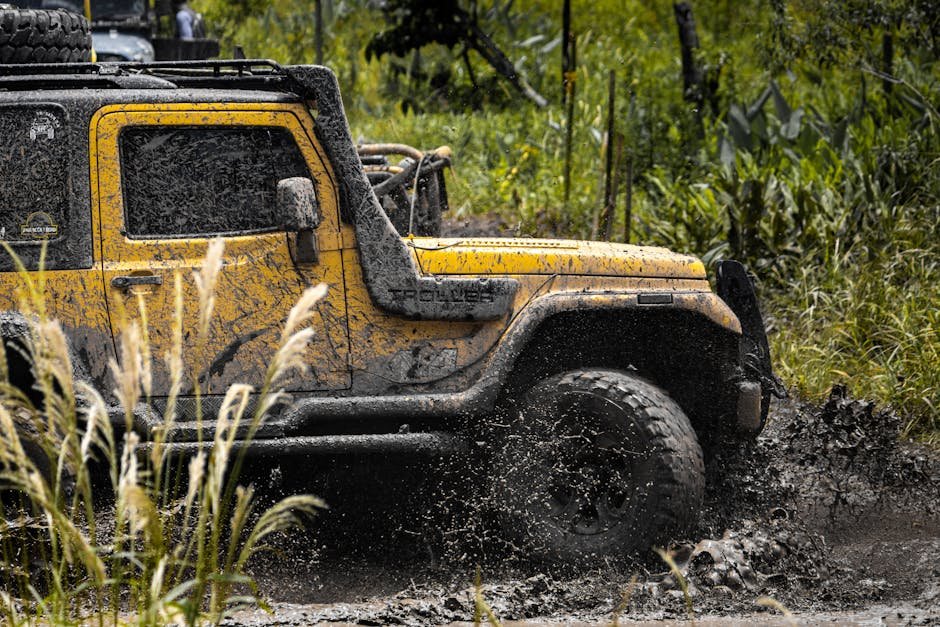
Let me paint you a picture. It is a Saturday afternoon, you are twenty miles down a forest service road, and your rig is buried up to the frame rails in a mud pit that looked totally manageable five seconds ago. No cell service. No pavement for an hour in either direction. What happens next depends entirely on what you packed in the back of your truck.
I have been in that exact situation more times than I care to admit. The difference between a minor inconvenience and a full-blown emergency comes down to your off-road recovery gear. Over the years I have built, tested, broken, and replaced every piece of recovery equipment in my kit. Whether you are a seasoned wheeler or just getting into the off-road life, here are the 10 essential recovery gear items you should never hit the trail without, with real product picks, honest prices as of March 2026 (see our GPS and trail mapping), and trail stories to back them up.
Why Every Off-Roader Needs a Complete Recovery Kit
I hear it all the time from newer off-roaders: “I am not doing anything crazy, so I do not need recovery gear.” I respect the confidence, but the trail does not care about your plans. I have watched bone-stock Jeeps on easy-rated trails get hopelessly stuck because of a hidden rut or a rainstorm that turned hard-pack into a slip-and-slide. A solid recovery kit is not about expecting the worst. It is about handling the unexpected like a pro instead of calling for an expensive tow that may not be able to reach you. Plus, a well-stocked kit makes you the hero of the trail group. Nothing earns more respect in the off-road community than being the person who shows up prepared.
1. Winch: The King of Self-Recovery
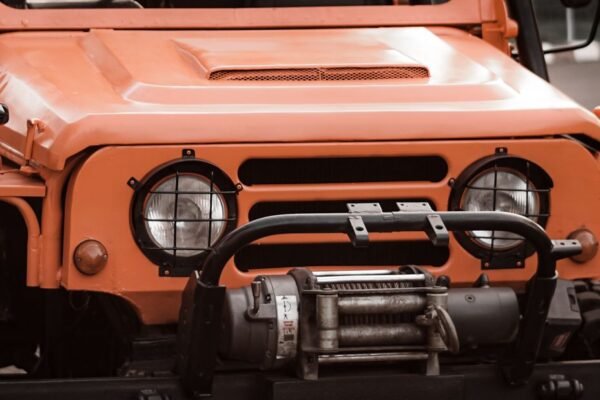
If I could only have one piece of off-road recovery gear, it would be a winch. A winch turns your rig into its own tow truck. Stuck in a ditch, bogged in mud, need to help a buddy up a loose climb, a winch handles all of it.
On a trip out to the Rubicon Trail, I watched a guy in a nicely built JK wedge his front axle between two boulders. My Warn winch had him free in ten minutes. Without it, he would have been waiting hours for a trail rescue.
What to Buy
The Warn VR EVO 10-S is my go-to. It pulls 10,000 pounds, comes with synthetic rope, and the build quality is outstanding. For a budget option, the Smittybilt X2O Gen3 has improved dramatically over earlier generations.
- Price range: $400-$1,500 depending on brand and capacity
- Sweet spot: Warn VR EVO 10-S at around $900-$1,100
- Rule of thumb: Your winch should be rated for at least 1.5x your vehicle’s gross weight
2. Recovery Boards (MAXTRAX): Instant Traction
Recovery boards seem almost too simple to work, and then they save your bacon. You shove a textured board under your tire, and it gives you the grip to drive out of sand, mud, or snow. No straps, no winching, no drama.
Last spring outside Moab, one of our rigs sank into a soft sand wash up to the running boards. We slid a pair of MAXTRAX under the rear tires and the driver rolled out in thirty seconds. The whole group just stood there like, “That is it?” Yeah, that is it.
What to Buy
MAXTRAX MKII are the industry standard. Engineered nylon reinforced with glass fiber, they flex without breaking. Brands like X-Bull make decent boards at half the price, but MAXTRAX durability is on another level.
- Price range: $60-$300 per pair
- Sweet spot: MAXTRAX MKII at around $250-$300 per pair
- Pro tip: Always carry two boards minimum. Four is even better for really soft terrain
3. Kinetic Recovery Rope: The Modern Tow Strap
Standard tow straps create a violent jerk when they go taut. A kinetic recovery rope stretches 20-30% under load, storing energy and releasing it smoothly. The result is a gentler, more effective pull that is easier on both vehicles and way less likely to send hardware flying.
I switched to kinetic rope after a sketchy experience where a static strap snapped a tow hook clean off a frame. Since the switch, every snatch recovery has been smooth and controlled.
What to Buy
The Yankum Ropes 7/8-inch x 30-foot is my top pick at 28,600 pounds breaking strength, made in the USA. Bubba Rope is another excellent option with a great range of sizes.
- Price range: $80-$300 depending on diameter and length
- Sweet spot: Yankum 7/8″ x 30ft at around $200-$250
- Important: Never use a kinetic rope with a winch. They are for vehicle-to-vehicle recovery only
4. D-Ring Shackles: The Connectors That Hold It All Together
D-ring shackles are the connection point between your rope and the vehicle’s recovery points. They are small, simple, and mission-critical. A failed shackle under load is a projectile. Do not cheap out.
On a group run through Uwharrie National Forest, someone pulled out a no-name shackle showing pin deformation before it even went under load. We swapped it out immediately. That kind of attention to hardware keeps people safe.
What to Buy
Factor 55 Crosby shackles are my first choice: forged steel, properly rated, documented working load limits. The Rhino USA D-Ring Shackle Set is a great budget two-pack. Also consider soft shackles made from UHMWPE rope, which are lighter and safer if they fail. I carry both types.
- Price range: $15-$60 per pair for steel, $20-$50 each for soft shackles
- Sweet spot: Rhino USA set at around $20-$30
- Standard: A 3/4-inch shackle rated at 9,500 lbs covers most Jeeps and trucks
5. Hi-Lift Jack: The Swiss Army Knife
The Hi-Lift jack has been around for over a century because nothing else does what it does. It lifts your vehicle, serves as a come-along winch, a clamp, a spreader, and more.
On a trail in the Cascades, a buddy’s rear axle was sitting on a rock with both rear tires in the air. No winch on his rig. We used my 48-inch Hi-Lift to raise the rear end, stacked rocks under the tires, and he drove off in fifteen minutes.
What to Buy
Get the original Hi-Lift HL-485 48-inch jack. For lifted rigs, step up to the 60-inch. Grab the Hi-Lift Off-Road Kit (winch clamp and lift mate) to expand its capabilities.
- Price range: $70-$120 for the jack, $30-$50 for accessories
- Sweet spot: Hi-Lift HL-485 at around $85-$100
- Safety warning: Hi-Lift jacks demand respect. Practice in your driveway before you need it on the trail
6. Portable Air Compressor: Air Down, Air Up, No Worries
Airing down your tires before the trail transforms traction and ride quality, but you need a way to air back up for the highway. I used to limp to the nearest gas station, but carrying a compressor changed everything. It is one of the off-road essentials I recommend to everyone entering the hobby.
Fifteen minutes trailside and all four tires are back to highway pressure. No hunting for a gas station air pump that is probably broken anyway.
What to Buy
The ARB Twin Motor Portable Compressor (CKMTP12) is the gold standard: fast, reliable, and can run air lockers. The VIAIR 400P is a great budget portable option that clamps to your battery.
- Price range: $60-$450
- Sweet spot: VIAIR 400P at around $150-$200 for portability
- Do not forget: A quality tire deflator for airing down. The Coyote Rapid Tire Deflator makes it fast and consistent
7. Tree Saver Strap: Protect the Trail
A tree saver strap wraps around a tree to create a safe winch anchor point. Running your winch line directly around bark will kill the tree, and abrasion damage weakens your rope over time. We are off-roaders, not vandals. Tread lightly is not just a bumper sticker.
What to Buy
The Warn 88924 Tree Trunk Protector is excellent: 3 inches wide, 8 feet long, rated for 18,000 pounds. Smittybilt and ARB also make quality options. This is one of the cheapest items on the list, so there is no excuse not to have one.
- Price range: $15-$50
- Sweet spot: Warn 88924 at around $25-$35
- Sizing: At least 3 inches wide, 8 feet long handles most situations
8. Snatch Block: Double Your Winch Power
A snatch block is a heavy-duty pulley that lets you run your winch line through it and back to your vehicle, effectively doubling your pulling power. It also lets you redirect the pull angle when the only anchor is not directly in front of you.
Last fall in Colorado, I had to pull a buddy’s loaded Gladiator out of a creek bed where he had slid sideways. A straight pull would have dragged him into a tree. I rigged a snatch block off a tree uphill, redirected the angle, and walked him out clean.
What to Buy
The Warn 15640 Snatch Block (16,000 lb rating) is the one I trust. It is beefy and the sheave spins smoothly.
- Price range: $30-$100
- Sweet spot: Warn 15640 at around $40-$60
- Pro tip: When you double-line with a snatch block, the load on the anchor point doubles. Make sure ratings match
9. Off-Road Shovel: Simple, Essential, Underrated
A shovel is the most underrated piece of off-road recovery gear out there. Before you fire up the winch, sometimes the fastest recovery is just digging. Clear mud, build a ramp out of a rut, move rocks hanging up your undercarriage. A shovel never needs batteries and never needs a second vehicle.
On a winter trip in the Sierras, an unexpected snow drift buried the front of my JK to the bumper. Twenty minutes of digging and we drove right out. Simple, effective, no drama.
What to Buy
The Krazy Beaver Super Shovel is designed for off-road use with a reinforced handle and a sharp root-cutting edge. The DMOS Stealth Shovel is a collapsible aluminum option that packs down small. For the budget-conscious, a hardware store pointed-tip shovel works fine.
- Price range: $15-$120
- Sweet spot: Krazy Beaver Super Shovel at around $60-$80
- Consider also: A folding entrenching tool as a backup. They weigh nothing
10. Tire Repair Kit: Because Flats Happen
It is not a matter of if you get a flat on the trail, it is when. A full-size spare is step one, but what about a second flat? A quality tire repair kit lets you plug a puncture trailside in five minutes.
On the Trans-America Trail last summer, I picked up a screw in my rear tire somewhere in Tennessee. Plugged it with a rope-style patch, aired it up with my compressor, and that tire is still on my Jeep right now with zero issues.
What to Buy
The ARB Speedy Seal Tire Repair Kit is the best purpose-built option I have used. The Boulder Tools Heavy Duty Kit is another great choice with 56 pieces. For bare minimum, a basic rope-plug kit costs under ten bucks at any auto parts store.
- Price range: $8-$60
- Sweet spot: ARB Speedy Seal at around $30-$40
- Do not forget: Pair with your compressor. A plug is useless if you cannot re-inflate. Carry spare valve cores too
Building Your Recovery Kit: A Budget Priority Guide
You do not need to buy everything at once. Here is how I would prioritize:
- Tier 1 – The Basics (under $150): D-ring shackles, tree saver strap, tire repair kit, and a shovel. Covers the most common situations.
- Tier 2 – Level Up (add $300-$500): Recovery boards, portable air compressor, and kinetic recovery rope. Now you handle soft terrain and proper vehicle-to-vehicle recovery.
- Tier 3 – Full Send (add $800-$1,500): Winch, Hi-Lift jack, and snatch block. The complete self-recovery setup.
Storage and Organization
Great gear is pointless if it is buried under camping equipment when you need it. I keep all soft goods in a dedicated bag like the Overland Vehicle Systems Recovery Wrap. The Hi-Lift and MAXTRAX are externally mounted. The key principle: recovery gear needs to be accessible when you are stuck at a weird angle in a ditch.
Practice Before You Need It
This might be the most important advice in this entire article. Buy the gear, yes, but then learn how to use it before you are stuck in the rain at dusk trying to figure out how a snatch block works for the first time. Set up your winch in the driveway. Practice rigging a kinetic rope recovery in a field. Most off-road clubs run recovery clinics where experienced wheelers teach proper technique. If you can find one in your area, go. It is the best investment of time you will make in this hobby.
Final Thoughts
Building a solid recovery kit is one of the smartest things you can do as an off-roader. It is not glamorous, and it does not look as cool as a new bumper or beadlock wheels. But when you are axle-deep in mud twenty miles from the highway, you will trade every aesthetic mod on your rig for a winch and a tree saver. I guarantee it.
Every item on this list has earned its place through real trail use and real recoveries. Whether you drive a Jeep, a Tacoma, a Bronco (see our winter Jeep maintenance) (see our Jeep TJ suspension upgrade), or a full-size truck, these off-road essentials are universal. The trail does not care what badge is on your grille. It cares whether you are prepared. Gear up, practice your skills, respect the trail, and go have an adventure. I will see you out there For more on this topic, see our overlanding 101..
Got questions about recovery gear or want to share your own trail story? Drop a comment below or find me on the IGNA Online forums. I read every single one.

Leave a Reply