
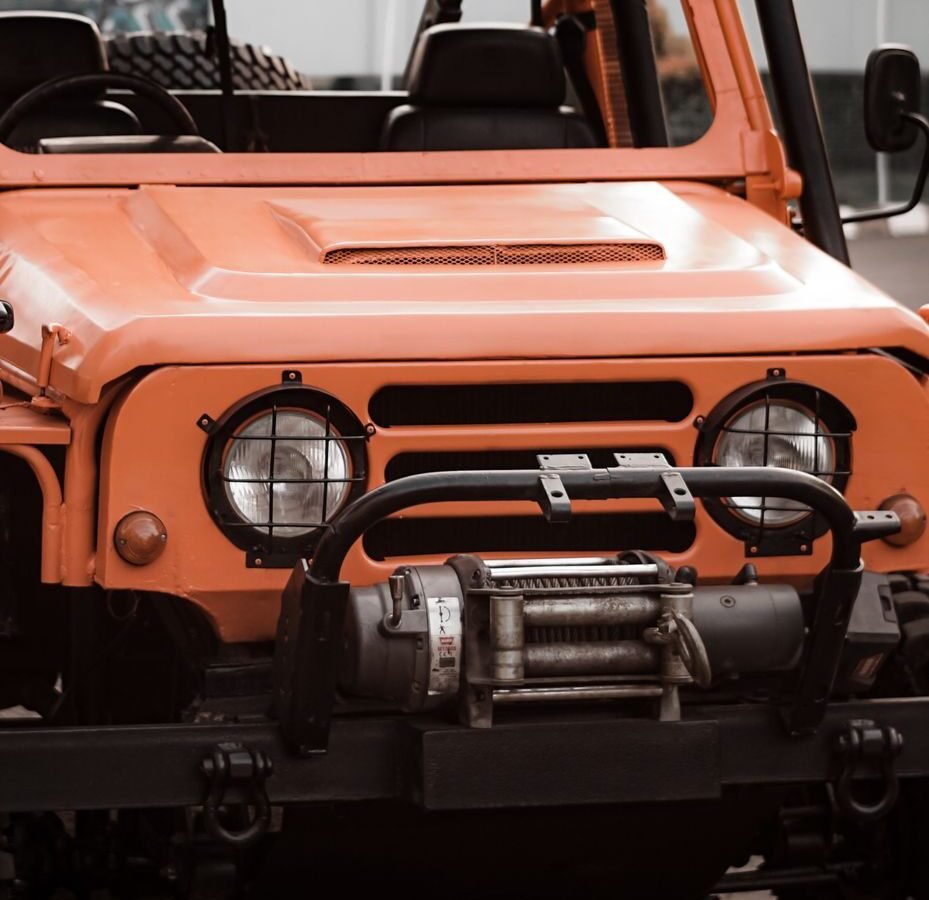

A winch is one of the most important pieces of recovery gear you can add to a Jeep or overland rig — and also one of the most misunderstood. Pick the wrong capacity, mount it incorrectly, or rig it improperly on the trail, and you have expensive dead weight at best and a dangerous failure at worst. This guide covers everything you need to choose the right winch, mount it properly, and use it safely for trail self-recovery and assisting other rigs.
Understanding Winch Capacity: The 1.5x Rule
The single most important spec when buying a winch is its rated line pull — and the most common mistake is going too small. The standard recommendation is to choose a winch rated at a minimum of 1.5 times your vehicle’s gross vehicle weight (GVW). For a stock Jeep Wrangler JL Rubicon with a GVW around 5,500 lbs, that means an 8,500 lb minimum. Most Jeep builds with armor, bumpers, a roof rack, and a full overlanding kit push 6,000–7,000 lbs loaded, making a 9,500–10,000 lb winch the practical floor.
This matters because winch line pull ratings are measured with a single layer of cable on the drum. As you spool out line and add additional layers, pulling force drops significantly — sometimes by 30–40% on the outer layers. If you are buying a winch for serious off-road use, do not buy to GVWR; buy to loaded trail weight with headroom.
Electric vs Hydraulic Winches
For the vast majority of Jeep and overlanding builds, an electric winch is the right choice. Electric winches are self-contained, easy to install, work independently of engine RPM, and can be operated with the engine off if your battery has charge. Brands like Warn, Smittybilt, Superwinch, and Rough Country all offer reliable electric options from $300 to $1,000+.
Hydraulic winches use your power steering pump to generate pulling force. They are extremely powerful, run cool under extended use, and never drain your battery — but they require the engine to be running, they are complex to install, and they only work on vehicles with a hydraulic power steering system (which rules out most newer JLs with electric power steering). Unless you are building a dedicated expedition rig for extended remote travel, stick with electric.
Synthetic Rope vs Steel Cable
This debate has largely been settled among experienced off-roaders: synthetic rope wins for almost every trail application. Here is why:
- Safety: Steel cable stores massive kinetic energy when tensioned and can recoil violently if it snaps. Synthetic rope simply falls when it breaks — a critical safety difference.
- Weight: Synthetic rope is dramatically lighter, which matters for front-end weight distribution.
- Handling: Synthetic rope does not develop the wire burrs that steel cable accumulates over time — burrs that will shred your gloves and cut your hands.
- Performance: Synthetic rope spools and unspools more smoothly and maintains a more consistent pull rating across drum layers.
The main downsides of synthetic are UV degradation over time and susceptibility to abrasion against sharp rocks. Protect it with a line damper during pulls, store it out of direct sun when not in use, and inspect it regularly for fraying. High-quality synthetic rope like Warn’s Spydura or Factor 55’s ProLine will outlast most builds.
Choosing a Mount: Bumper-Integrated vs Plate Mount
How you mount your winch is just as important as the winch itself. There are two main approaches:
Bumper-integrated winch mount: The cleanest and most common solution. Companies like ARB, LOD, Rough Country, and Warn make steel or aluminum front bumpers with integrated winch plates designed specifically for your Jeep’s frame mounting points. A quality bumper like the ARB Summit distributes winch load forces directly into the frame rails, which is where you want the stress to go. This is the recommended route for any serious build.
Receiver hitch winch plate: A quick-deploy solution that slides into a 2-inch receiver hitch — front or rear. These are useful for occasional use or for rigs without a dedicated winch bumper, but they transfer load through the receiver tube rather than the frame, limiting safe pull capacity. Do not attempt heavy recoveries with a receiver-mounted winch unless the plate is rated for it and your hitch is a heavy-duty frame-mount unit.
Essential Rigging Equipment
A winch without proper rigging gear is dangerous. Every trail kit should include:
- Snatch block: Redirects your winch line around obstacles and, when used in a double-line pull, halves the load on the winch and increases pulling force. Essential for any serious recovery.
- Tree saver strap: A wide nylon strap (3–4 inches) that wraps around an anchor tree without damaging bark. Never wrap your winch line directly around a tree.
- D-ring shackles (bow shackles): Connects straps and blocks. Use rated shackles with a WLL (working load limit) at least equal to your winch capacity. Moose Knuckle and Factor 55 make excellent options.
- Line damper: A heavy bag or purpose-made damper draped over the winch line during a pull. If the line snaps, the damper absorbs energy and kills the recoil. Non-negotiable for safety.
- Recovery gloves: Thick leather gloves for handling cable and rope under tension. Do not handle a tensioned winch line bare-handed.
Step-by-Step: Self-Recovery on the Trail
When you are stuck and need to pull yourself out, follow this sequence:
- Assess before you winch. Is the anchor solid? A 12-inch diameter live tree is ideal. Dead trees, small saplings, and loose boulders are poor anchors. Look for buried anchor points (embedded rocks, other vehicle frame points) if trees are not available.
- Wrap your tree saver, not your line. Loop the tree saver around the anchor at the lowest practical point. Attach your hook or shackle to the loop end of the saver.
- Lay out enough line. Spool out at least 2/3 of your winch line — the first 1/3 on the drum is your weakest pull. Use a snatch block if the anchor is not directly ahead; redirecting around obstacles also protects the line from abrasion.
- Place the line damper. Drape it over the winch line midway between your rig and the anchor before tensioning.
- Clear the area. Everyone should stand well clear of the line path — off to the side, not behind the vehicle.
- Winch in short bursts. Engage the winch and pull in 5–10 second bursts. This lets the motor cool, lets you assess progress, and prevents overheating. Keep the engine running to feed the battery.
- Re-spool carefully. After recovery, spool your line back in under light tension so it wraps evenly on the drum. A poorly spooled drum reduces capacity and can damage synthetic rope.
Top Winch Picks for Jeep Builds in 2026
Based on reliability, parts availability, and community feedback from Jeep clubs and overlanding forums, these are the standout options at each tier:
- Warn Zeon 10-S ($900–$1,100): The gold standard. Sealed motor, Spydura synthetic rope, wireless remote, and a 10,000 lb capacity that covers any Jeep build. Built in the USA.
- Warn VR EVO 10-S ($550–$700): Warn quality at a more accessible price. Not as refined as the Zeon, but proven across hundreds of thousands of builds. Excellent entry point into a proper winch setup.
- Smittybilt X2O 10K ($380–$480): IP67 waterproof rated, synthetic rope standard, wireless remote included. Best value play at the 10,000 lb tier for moderate-use rigs.
- Superwinch SX10SR ($500–$620): Strong alternative to the Warn VR EVO with sealed fairlead and synthetic rope. Good mid-tier pick for frequent trail users.
For more on building out your overlanding setup, our Roof Top Tents for Overlanding in 2026 guide covers shelter options that pair well with a recovery-ready rig. And if you want deeper coverage on winch selection specifically for Jeep builds, our earlier piece on Choosing the Right Winch for Your Jeep goes deep on capacity math and use-case scenarios.
Common Mistakes to Avoid
- Buying undersized: A 6,000 lb winch on a 5,500 lb GVWR Jeep has almost no real-world margin. Go bigger.
- Skipping the line damper: One snap without a damper and you will never skip it again. Use it every time.
- Running the winch until it overheats: Electric winch motors have a duty cycle. If it gets hot, stop and let it cool for 15–20 minutes before continuing.
- Anchoring to a tow ball: Never use a ball hitch as a winch anchor. They are not designed for side loads and will shear off.
- Hooking back to your own line: Never attach your winch hook back to the winch line itself under load. Use a D-ring shackle through a recovery point.
Final Thoughts
A properly chosen, correctly mounted, and well-rigged winch transforms a stuck situation from a trip-ending emergency into a minor inconvenience. Spend the time to get the right winch for your loaded trail weight, invest in quality rigging gear, and practice the recovery sequence before you need it on a remote trail. The goal is to be the rig that helps others, not the one waiting to be pulled out.



Leave a Reply